
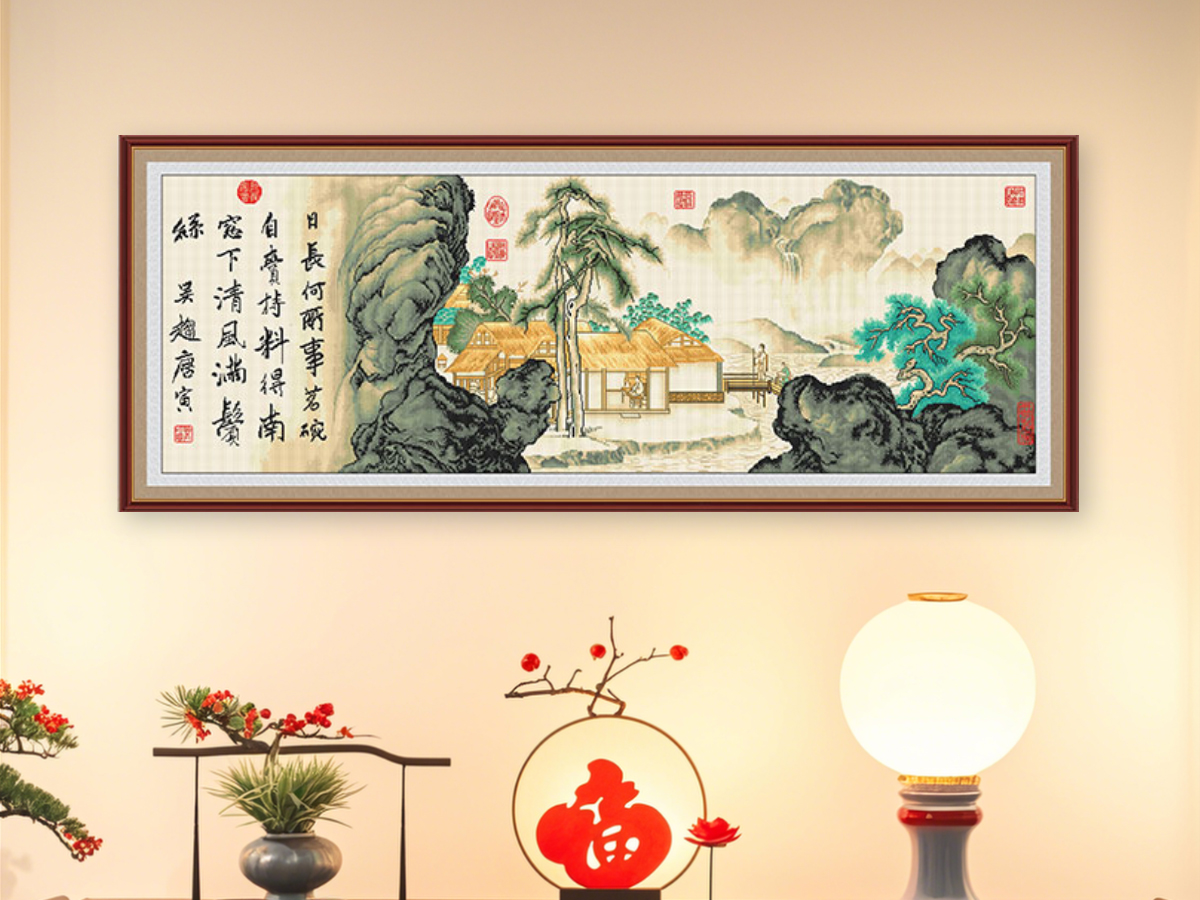
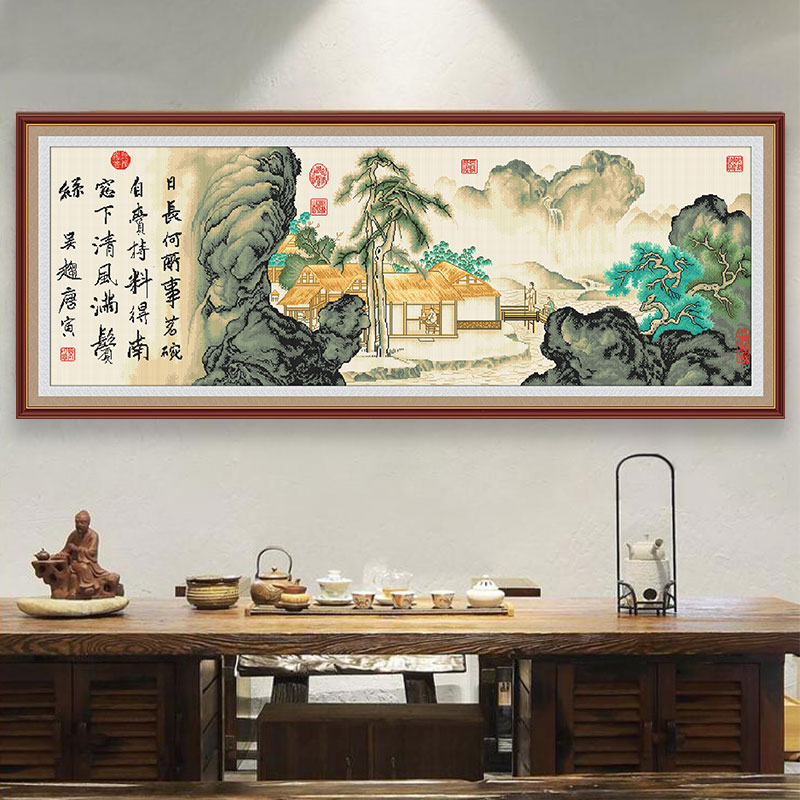
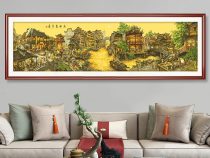
Serving Tea Cross Stitch is an invitation to step into a moment of quiet contemplation and scholarly refinement. This design recreates a celebrated masterpiece by Tang Yin (唐寅, 1470–1524), also known as Tang Bohu, one of the most legendary artists of the Ming Dynasty and a member of the revered “Four Great Masters of the Ming.” His painting, Serving Tea (《事茗图》), now a treasured part of the collection at the Beijing Palace Museum, is a beautiful embodiment of the literati spirit, capturing the serene atmosphere of a tea gathering in a secluded mountain retreat. By stitching this design, you are not just creating a landscape; you are weaving a connection to a golden age of Chinese art, scholarship, and the timeless culture of tea.
The Artist and the Spirit of the Literati: Tang Yin’s Masterpiece
Tang Yin is a figure of immense talent and romantic legend. He was a brilliant scholar, poet, and painter whose life, marked by both triumph and tragedy, is often romanticized in Chinese culture. His art is celebrated for its lyrical beauty, its profound personal expression, and its deep connection to the ideals of the scholar-official class.
Serving Tea is a quintessential example of his mature style. It was created as a personal and deeply meaningful gift for a friend, Chen Shiming. This context is crucial: this is not a grand, public commission but an intimate, sincere offering between kindred spirits. The painting is a visual poem, a gift of pure sentiment. The artist’s own inscription on the painting reveals its gentle spirit: “On a long day, with nothing much to do, I hold my tea bowl. I suppose beneath the southern window, the gentle breeze caresses my hair.” These lines invite the viewer into a moment of perfect, leisurely contentment.
A Haven of Peace: Decoding the Tea Gathering Scene
The painting is a harmonious composition of figures, architecture, and landscape, all contributing to the feeling of a secluded, peaceful haven.
- The Host and the Ritual of Tea: In the foreground, in a simple, elegant thatched cottage, the master of the house is depicted. He sits with quiet composure, a tea bowl in his hand, bathed in the soft light from the window. The focus on this solitary, tranquil figure elevates the act of tea drinking from a simple daily routine to a meditative ritual. It represents the ultimate ideal of the literati life: a retreat from worldly concerns to focus on simple pleasures, scholarship, and self-cultivation.
- The Courtyard and the Guest: A young attendant is seen in the courtyard, crossing a small bridge, likely bringing a guest to the tea gathering. This subtle detail adds a layer of social warmth, showing that the joy of this retreat is meant to be shared with close friends. The scene balances solitude and companionship.
- The Secluded Setting: The cottage is nestled in a landscape of serene beauty. A majestic boulder in the foreground anchors the composition, while distant mountains and a waterfall (a classic element of Chinese landscape painting) create a sense of infinite depth and remove. This setting is designed to evoke a hermitage, a place of retreat and spiritual renewal, far from the noise of the world.
- The Gentle Palette: Tang Yin’s use of soft, elegant ink tones and delicate washes creates a subdued, peaceful atmosphere. The colors are not vibrant but muted, evoking a sense of calm, maturity, and refined taste.
A Masterpiece in Thread: Recreating Literati Elegance
Translating the delicate brushwork and serene atmosphere of a literati painting into cross-stitch is a respectful and thoughtful process. Our design captures the essence of the original through:
- A Palette of Scholar’s Tones: Carefully selected threads replicate the painting’s soft, harmonious colors. The subtle greys, warm browns, and gentle greens of the original ink and wash painting are all meticulously matched to create a feeling of quiet, scholarly elegance.
- Stitching for Detail and Atmosphere: The pattern uses precise, varied stitches to capture the many layers of the composition. Dense, detailed stitching brings the textures of the rocks and the thatched roof to life, while softer, more flowing stitches recreate the misty distance of the mountains and the calm water.
- Narrative Fidelity: The composition is carefully mapped, preserving the balanced arrangement of the cottage, the host, the guest, and the surrounding landscape. The result is a faithful and evocative recreation of Tang Yin’s peaceful vision.
A Treasure of Culture, Contemplation, and Connection
The Serving Tea Cross Stitch is a unique fusion of art, history, and heartfelt meaning.
- A Connection to a Master and a Friend: This design offers a tangible link to the genius of Tang Yin and a deeper understanding of the literati spirit. Its original purpose as a personal gift between friends adds a profound layer to its meaning, making it a powerful symbol of friendship and appreciation.
- A Decorative Statement of Refined Peace: The finished piece is a breathtaking work of art. Its serene composition and elegant tones make it an ideal addition to a study, living room, or tea room, adding a touch of profound cultural depth and quiet, contemplative energy to the space.
- A Meditative and Rewarding Journey: The detailed, engaging pattern offers a calming, focused creative experience. As you stitch the quiet scene, you can feel a connection to the slow, deliberate practice of the Ming scholar, making the process a form of mindful meditation.
- A Gift of Deep Sincerity: This cross-stitch makes an exceptionally thoughtful gift for any occasion where you wish to convey a sense of respect, appreciation, and quiet beauty. It is a perfect present for a friend, a lover of tea, or a connoisseur of Chinese art and culture. It carries a wish for peaceful, reflective moments.
Stitching a Moment of Timeless Peace
The Serving Tea Cross Stitch is an invitation to step into a quiet studio in the Ming Dynasty. It allows you to recreate a moment of perfect, scholarly contentment and to weave the gentle, elegant spirit of Tang Yin’s art and the culture of tea into your own life.
#ServingTeaCrossStitch
#TangYinMingDynastyArt
#ChineseTeaCultureEmbroidery
#MingDynastyLiteratiArt
#PalaceMuseumPaintingStitch#ClassicalChineseArtCrossStitch



Leave a Reply