
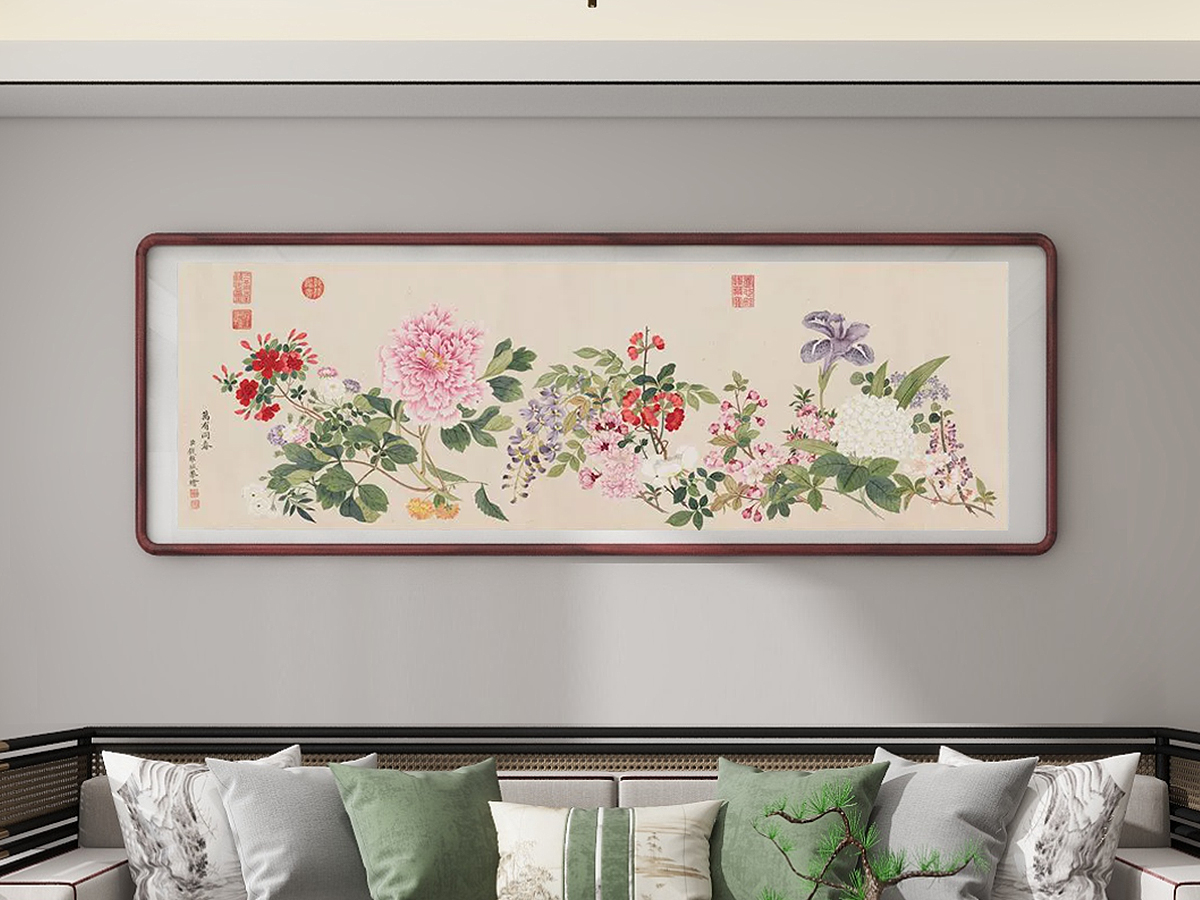
Wan You Tong Chun Tu Cross Stitch invites you to recreate one of the most magnificent floral masterpieces of the Qing Dynasty. Exquisitely adapted from the iconic artwork by renowned court painter and scholar Qian Weicheng (1720–1772), this cross stitch design faithfully revives the timeless splendor of this imperial scroll. Originally crafted to celebrate Emperor Qianlong’s 60th birthday, the painting serves as a grand visual ode to eternal spring, embodying noble imperial elegance and profound auspicious symbolism. More than a simple decorative craft, Wan You Tong Chun Tu Cross Stitch lets you stitch far beyond a beautiful floral arrangement. With every delicate stitch, you weave a precious fragment of royal history, as well as timeless blessings of vigorous vitality and lasting prosperity for your home.
The Artist and the Imperial Commission: Qian Weicheng’s Masterpiece
Qian Weicheng was a man of exceptional talent. A Zhuangyuan (top scholar) in the imperial examinations, he rose to become a high-ranking official and a favored artist in the court of Emperor Qianlong. His dual identity as a scholar and a painter is reflected in his work, which combines technical precision with a refined, literati sensibility.
The Wan You Tong Chun Tu (《万有同春图》), or “Myriad Things Share the Spring,” is one of his most celebrated works. It was a grand tribute painting, a category of art with profound ceremonial significance. This was not merely a decorative piece but a formal gift, a visual expression of loyalty, respect, and good wishes presented to the emperor. The painting’s very concept was designed to convey the most powerful blessings possible: a realm of endless spring, flourishing life, and universal harmony under the emperor’s virtuous rule.
A Garden of Symbols: Decoding the Composition
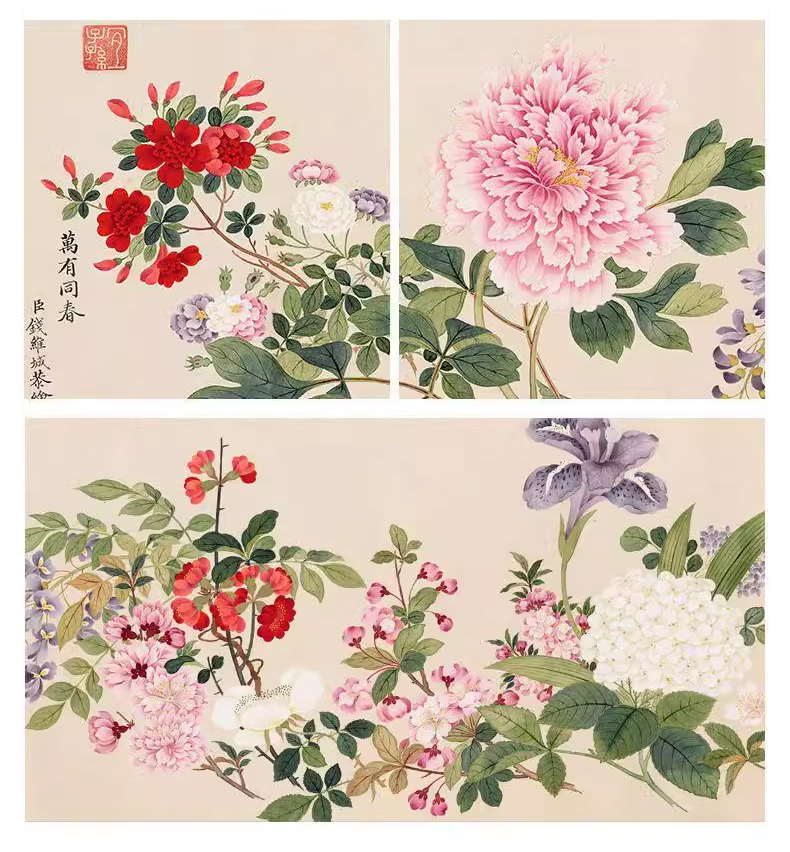
The genius of Wan You Tong Chun Tu lies in its intricate layers of meaning, meticulously woven into a breathtaking floral display. Our cross-stitch design faithfully recreates this symbolic garden.
- Sixty Flowers for a Sixty-Year Cycle: The painting features exactly 60 species of spring-blooming flowers. This number is deeply symbolic, representing the 60-year cycle of the Chinese zodiac and calendar (the Jiazi cycle). A full cycle was considered a complete lifetime, and presenting a painting with 60 flowers was a profound wish for the emperor to enjoy a long, complete, and blessed reign.
- The “Zhezhi” (Broken-Branch) Composition: The flowers are arranged using the classic Zhezhi technique. This refined method involves depicting elegant, natural clusters of blossoms and branches without showing the roots or the full plant. This creates a sense of floating beauty and focuses the viewer’s attention on the perfect form of each individual bloom. The cross-stitch pattern meticulously replicates this intricate, layered arrangement, balancing size, color, and form to create a rhythmic, harmonious whole.
- The “Boneless” Painting Technique: The original artwork employs the delicate Mogu (boneless) technique, perfected by the Qing master Yun Shouping. This method uses soft color washes without outlines to create lifelike, translucent petals and leaves. In our cross-stitch adaptation, this effect is masterfully recreated through carefully graded thread colors and precise stitch placement, capturing the smooth transitions, soft edges, and vivid textures of the original.
- The Message of Abundance: Every element—from the humble violet to the regal peony—is a symbol. The peony represents wealth and honor; the lotus, purity; the plum blossom, resilience; the peach, longevity. Together, these sixty blossoms create a visual prayer for an empire blessed with peace, prosperity, and the eternal renewal of spring. This cross-stitch carries that same powerful, auspicious message into your home.
A Masterpiece in Thread: Capturing Imperial Splendor
Translating the delicate “boneless” washes and complex Zhezhi composition of Qian Weicheng’s masterpiece into cross-stitch is an act of artistic devotion. This design honors the original through:
- An Imperial Palette: A carefully selected array of threads replicates the rich, vibrant, and harmonious colors of the Qing court. From the noble reds and pinks of the peonies to the soft, ethereal blues and lavenders of the wisteria, every hue is chosen to evoke the splendor of the imperial garden.
- Stitching for Delicacy and Depth: The pattern uses precise, detailed stitches to capture the essence of the “boneless” style. Gentle color gradations are achieved through subtle changes in thread shade, replicating the soft, translucent quality of the painted petals and leaves.
- Narrative Fidelity: The precise arrangement of the sixty flowers is meticulously charted, preserving the symbolic weight and visual rhythm of the original composition. The final piece is not just a floral pattern but a meaningful tribute to a masterpiece of ceremonial art.
A Treasure of Royal Blessings
The Wan You Tong Chun Tu Cross Stitch is a unique fusion of history, symbolism, and craft. Owning this piece means bringing a tangible blessing into your space.
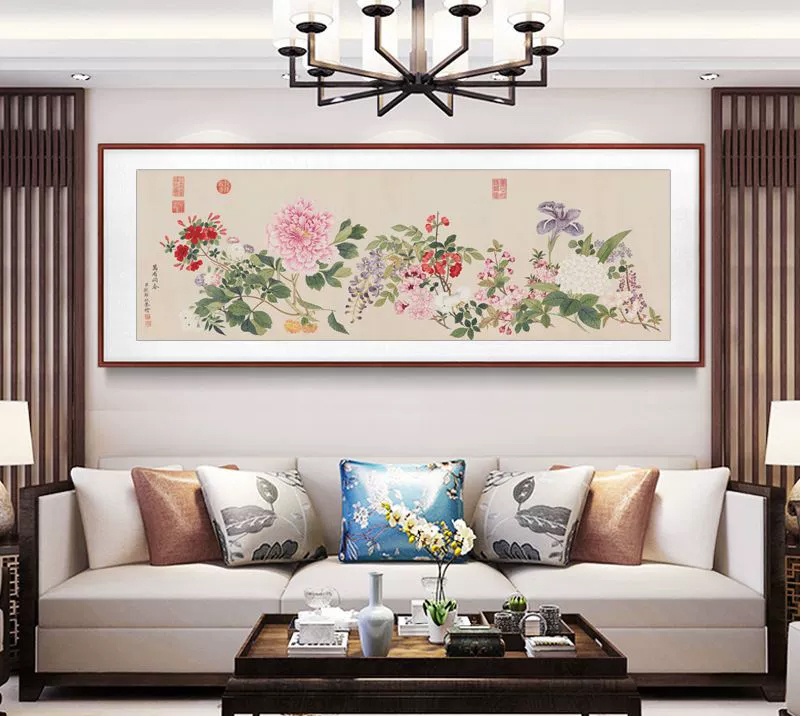
- A Royal Decorative Statement: Its magnificent presence, bursting with vibrant color and elegant form, makes it a stunning focal point for any living room, study, or gallery. It infuses any space with the noble grandeur and refined taste of the Qing court.
- A Powerful Symbol of Good Fortune: The sixty flowers and their rich symbolism represent a wish for a life filled with vitality, prosperity, and happiness. It is a visual blessing of eternal spring, making it a profoundly meaningful addition to any home.
- A Highly Collectible Heirloom: As a reproduction of a masterpiece created for an emperor’s birthday, this cross-stitch holds exceptional collectible value. It is a rare and meaningful way to connect with a pivotal piece of Chinese art and cultural history, a treasure to be passed down through generations.
- A Meditative and Rewarding Craft: The detailed, engaging pattern offers a calming, focused creative experience. Stitching this grand composition is a journey of patience and appreciation, culminating in a beautiful, historically significant work of art.
Stitching a Wish for Eternal Spring
The Wan You Tong Chun Tu Cross Stitch is more than a craft project; it is a royal blessing in thread. It invites you to engage with a masterpiece of Qing art, to own a piece of imperial history, and to weave the powerful, uplifting energy of eternal spring into your own life, one beautiful stitch at a time.
#WanYouTongChunTuCrossStitch
#QianWeichengArt
#QingDynastyFloralArt
#BonelessPaintingStitch
#ZhezhiFloralCrossStitch
#ImperialChineseArt#AuspiciousSpringDecor

Leave a Reply