
Introduction: A New Year Wish, Stitch by Stitch
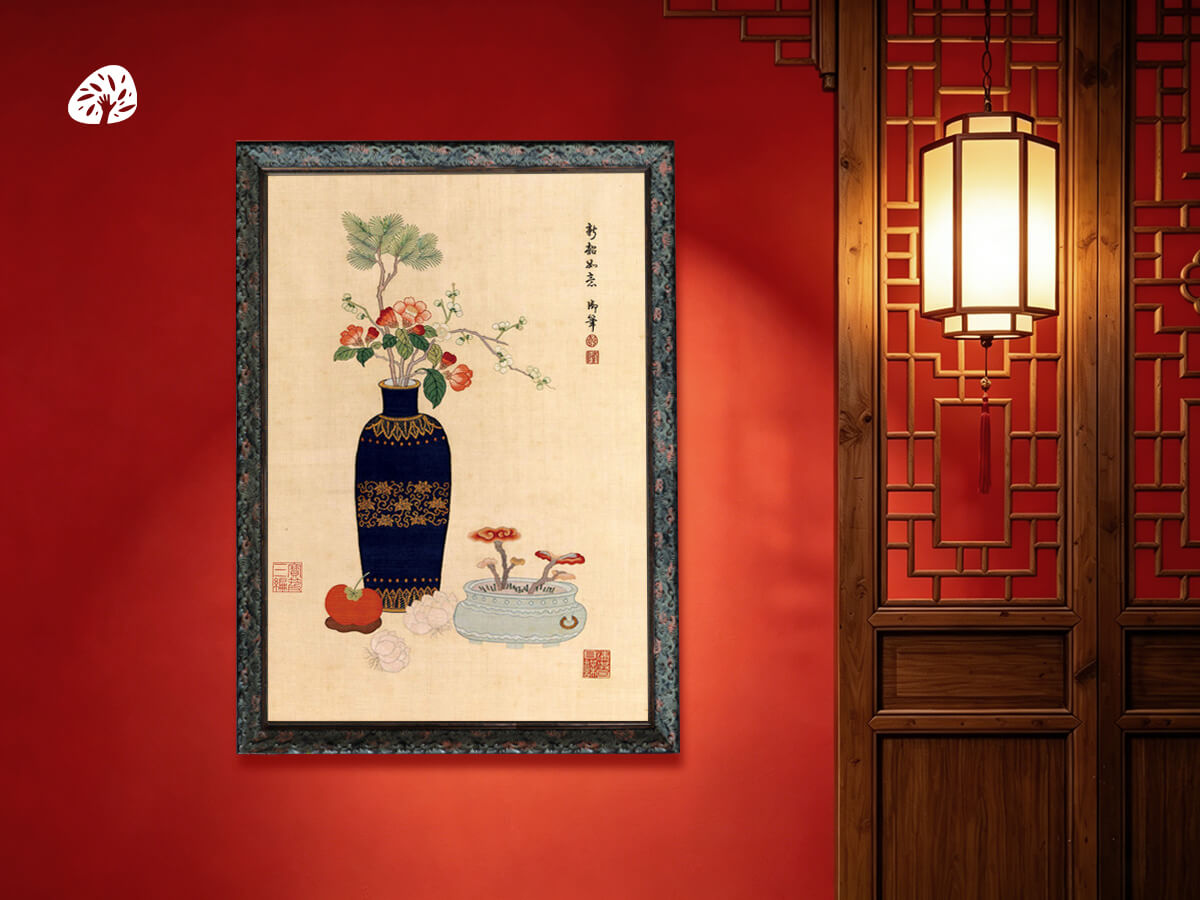
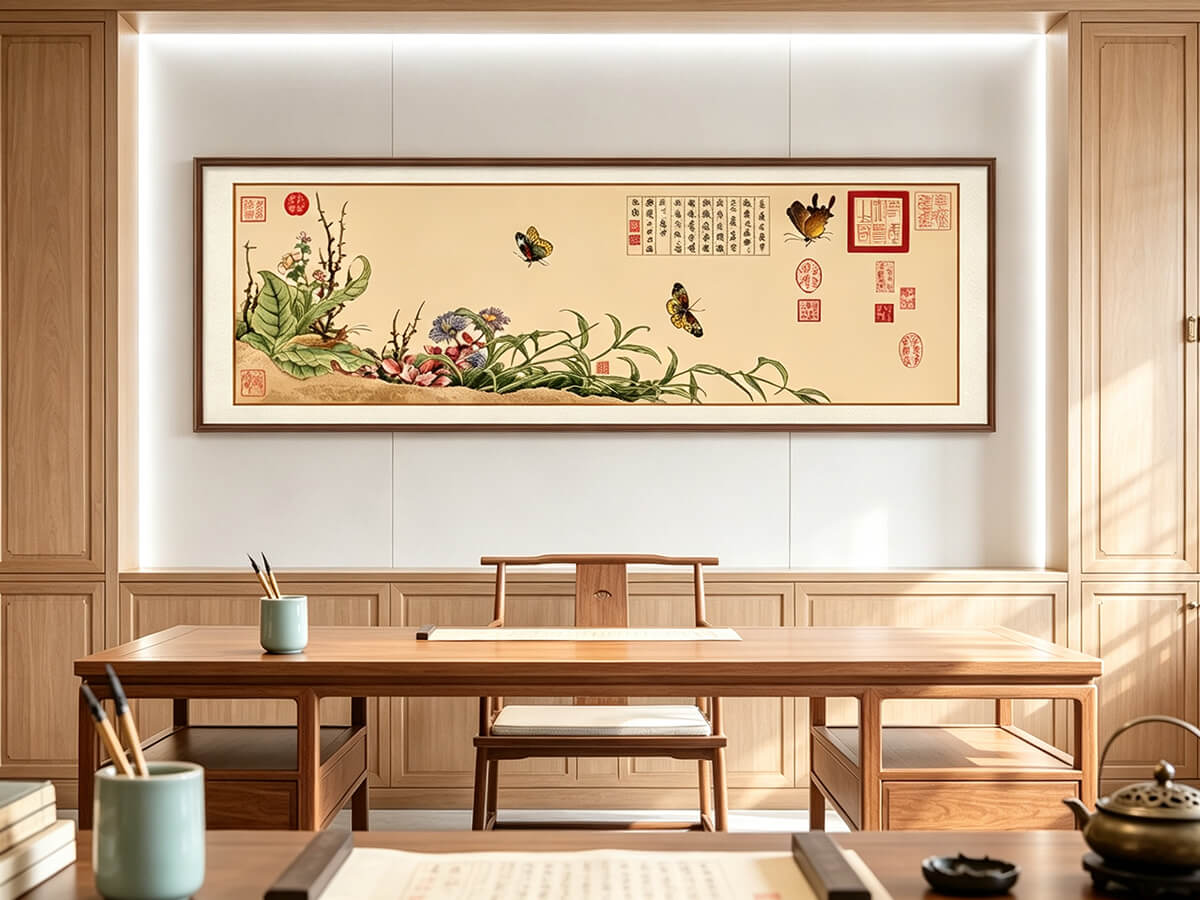
If you are looking for a meaningful and culturally rich project, Xinshao Ruyi Intent cross stitch offers something truly unique. This design draws directly from a celebrated Qing dynasty imperial painting — a Sui Chao Tu (New Year’s Day auspicious still life) that once graced the Forbidden City. Unlike typical winter motifs of holly or snowflakes, Xinshao Ruyi Intent cross stitch centers on vases, blossoms, and scholar’s objects, each carrying a silent wish for health, peace, and prosperity.
This pattern feels both timeless and accessible — a festive still life with clean lines, moderate detail, and deep symbolism. Whether you stitch it for Lunar New Year, the winter solstice, or simply as a year-round blessing, Xinshao Ruyi Intent cross stitch transforms fabric into a talisman of good fortune.
Why This Qing Dynasty Masterpiece Belongs in Your Hoop
A Still Life That Understands Cross-Stitch Logic
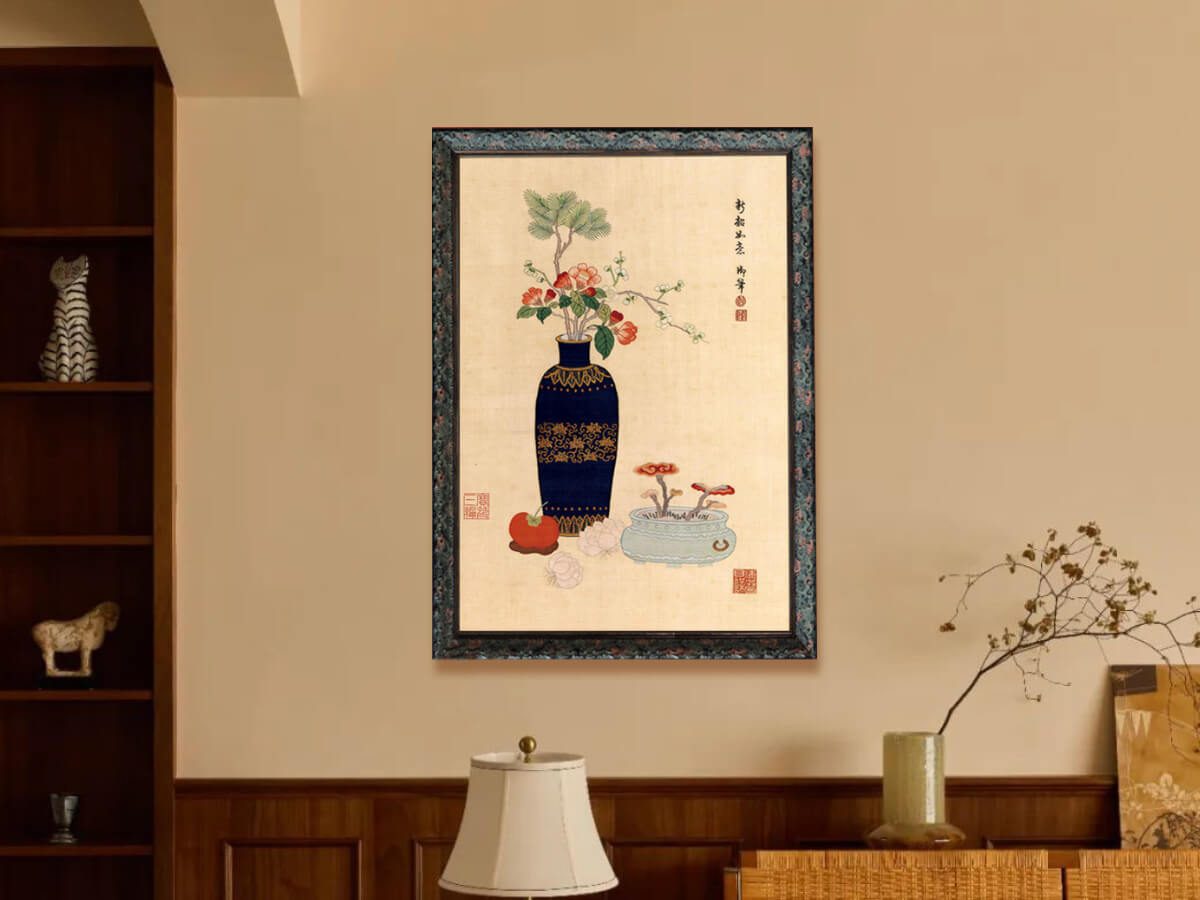
Great cross-stitch patterns rely on clear shapes, limited shading, and balanced composition. Xinshao Ruyi Intent cross stitch delivers exactly that. Most versions feature a tall vase or bronze vessel holding winter flowers — plum blossoms, camellias, and pine sprigs — accompanied by small auspicious accents like lingzhi mushrooms, persimmons, or lilies.
Each element translates beautifully into counted stitches:
- Plum blossom – resilience and hope (stitches well in pink, white, or deep red)
- Camellia – enduring beauty (smooth petal curves for backstitching)
- Pine – longevity and strength (ideal for textured green fills)
- Lingzhi mushroom – immortality (small, distinct shape — perfect for French knots)
- Persimmon + lily – “may everything go your way” (a visual pun easily charted)
The upright, compact composition of Xinshao Ruyi Intent cross stitch suits pillow tops, wall hangings, or festive gift samplers. It is neither overcrowded nor too sparse — a balanced design suitable for stitchers of various skill levels.
Three Imperial Versions – and Which One Fits Your Skill Level
Unlike a single painting, the original Xinshao Ruyi Intent exists in three major imperial forms. Each offers a different stitching experience.
1. Qianlong Kesi Silk Tapestry (Beijing Palace Museum)
This is the most cross-stitch-friendly version. Kesi — a silk tapestry technique — naturally mimics pixel-like squares of color. The design is clear, with strong outlines and minimal shading. Beginner and intermediate stitchers who enjoy block-color sections will find this version intuitive.
2. Qianlong’s Own Ink Sketch
A minimalist brush drawing by the emperor himself. Fewer details, more blank space. This version of Xinshao Ruyi Intent cross stitch is perfect for blackwork or monochromatic redwork — elegant, scholarly, and satisfying to complete.
3. Qian Weicheng’s Paper Version (Taipei Palace Museum)
The most detailed of the three. Includes rocks, narcissus, and seasonal fruits. Recommended for advanced stitchers who enjoy fractional stitches, blended threads, and subtle shading.
For most Xinshao Ruyi Intent cross stitch projects, the Kesi version offers the smoothest translation from imperial art to counted pattern. The ink sketch makes a lovely one-color holiday piece.
Symbolism That Speaks Across Cultures
Many stitchers turn to holly, mistletoe, or evergreen wreaths for winter holiday projects. Xinshao Ruyi Intent cross stitch offers a similar seasonal language — just different plants.
| Familiar Motif | Chinese Equivalent in This Design |
|---|---|
| Evergreen (holly / ivy) | Pine + camellia (evergreen + enduring) |
| Winter-blooming flower | Plum blossom (first to bloom in cold) |
| Circle of life / protection | Vase (symbol of peace and safety) |
| Festive red accent | Red lingzhi mushroom + camellia |
The word Ruyi in the title means “as your heart wishes” — closely matching the sentiment of “may all your wishes come true.” For gift stitchers, Xinshao Ruyi Intent cross stitch is essentially a good-fortune sampler. And unlike highly seasonal designs that feel outdated after a single month, this one works beautifully year-round: Lunar New Year, winter solstice, housewarming, birthday, or simply as a daily reminder of hope.
Final Thoughts: Stitch a 300-Year-Old Wish
The original Xinshao Ruyi Intent was not merely painted — it was woven in silk, brushed in ink, and cherished by emperors. Today, Xinshao Ruyi Intent cross stitch brings that same quiet magic into your hands. Whether you choose the regal Kesi version, the minimalist imperial sketch, or a blended interpretation, you are stitching more than flowers in a vase. You are stitching a wish for health, peace, and a year that unfolds exactly as your heart intends.
So next time you reach for a festive project, consider stepping beyond familiar motifs. Pick up a pattern of plum blossoms, pine, and a quiet Ruyi — because everyone, in any language, wants the year ahead to be kind.
#Xinshao Ruyi Intent cross stitch #Chinese New Year cross stitch pattern #Qing dynasty embroidery art #counted cross stitch still life #imperial auspicious symbols #Kesi tapestry for stitchers #festive needlework design


Leave a Reply