
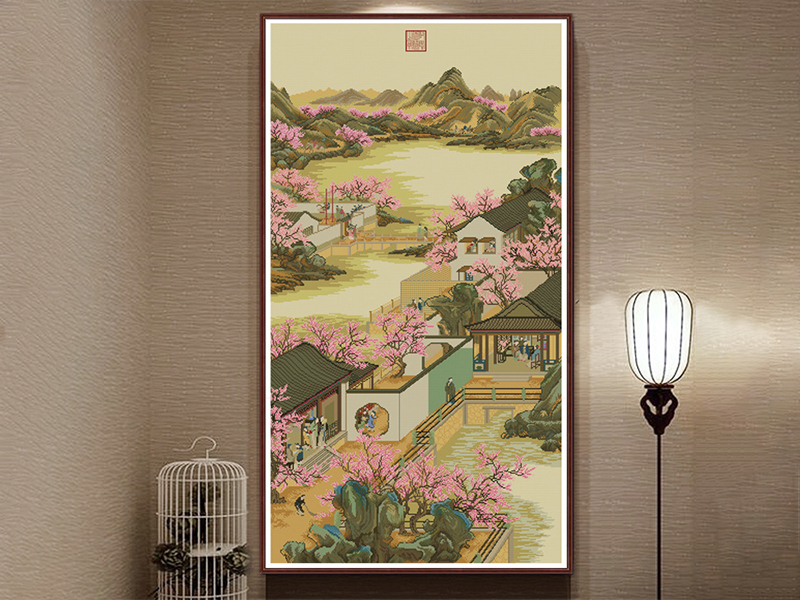
Twelve Months of Emperor Yongzheng Cross Stitch offers a rare and intimate glimpse into the private world of an emperor. Based on the renowned series by Italian Jesuit painter Giuseppe Castiglione (Lang Shining), this extraordinary embroidery kit recreates twelve scenes documenting a year in the life of the Yongzheng Emperor (r. 1722-1735). From Lantern Festival celebrations to snow-viewing in winter, the Twelve Months of Emperor Yongzheng Cross Stitch weaves a narrative of imperial elegance, seasonal ritual, and the refined cultural life that defined China’s Qing Dynasty at its zenith. More than a craft project, this kit invites you to stitch a tangible piece of Chinese history—a majestic heirloom for art lovers, history enthusiasts, and collectors alike.
The Artist and the Emperor: Castiglione’s Imperial Record
The creation of this series is a story of cultural synthesis. Giuseppe Castiglione, an Italian Jesuit missionary, arrived in China in 1715 and became one of the most trusted and celebrated painters at the Qing court. His genius lay in his ability to blend Western techniques of perspective, light, and anatomical realism with the traditional Chinese aesthetic of silk painting and brushwork. The result was a new, highly prized imperial style that brought a sense of vivid lifelikeness to courtly subjects.
The Yongzheng Emperor, known for his diligence, refined taste, and interest in the arts, was an ideal patron for Castiglione. This series, Twelve Months, is not a record of grand political events but a personal chronicle. It shows the emperor at leisure, engaged in seasonal pastimes that connect him to the rhythms of nature and the cultural traditions of his realm. It humanizes the sovereign, revealing a figure who is both a participant in and an appreciator of the elegant world around him.
A Journey Through the Seasons: The Twelve Monthly Scenes
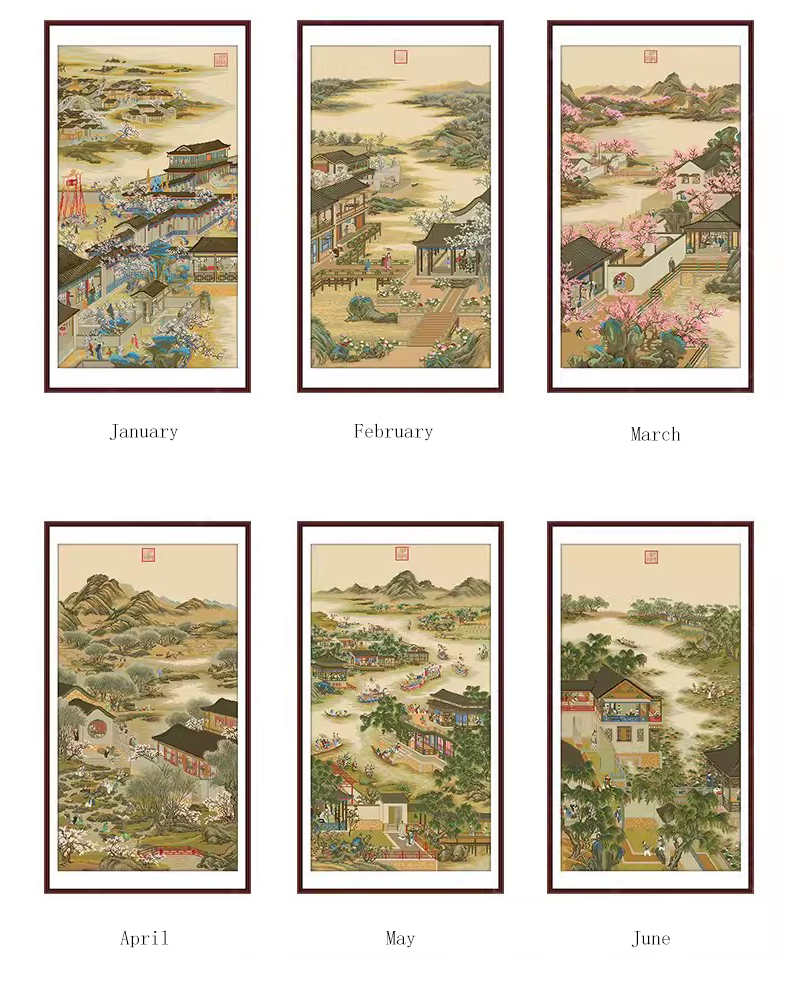
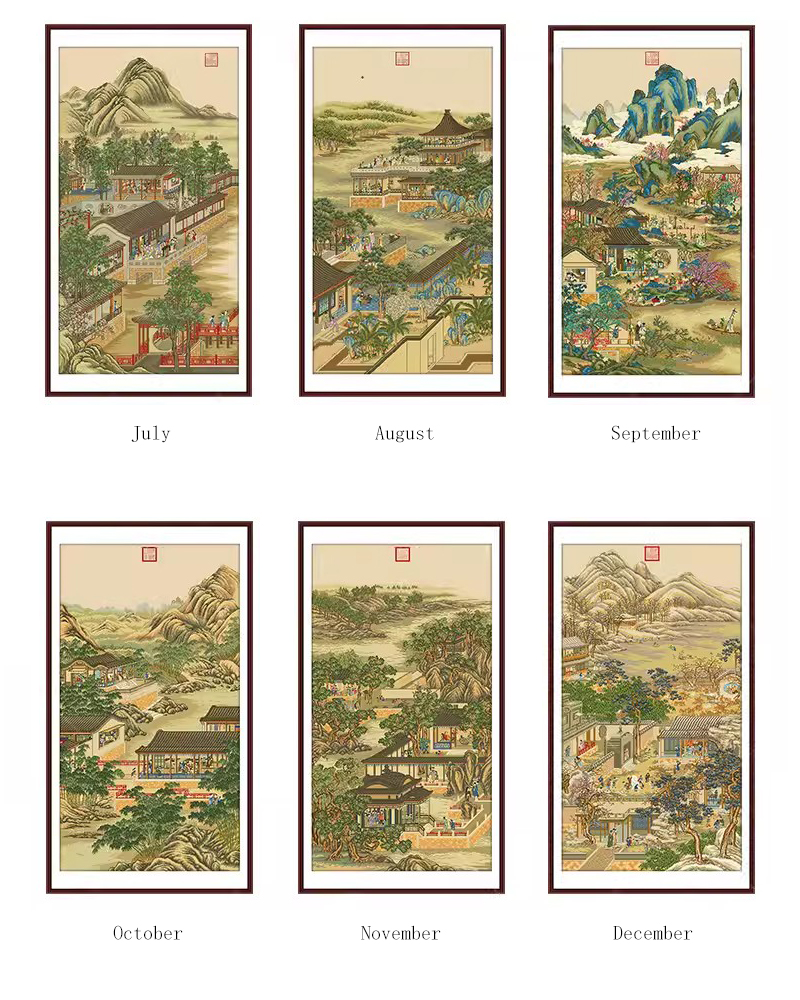
Each month in this cross-stitch tapestry depicts a unique activity, reflecting the changing seasons and the richness of Chinese imperial culture. Here is a closer look at this annual cycle:
- Spring: Renewal and Celebration
- January (Lantern Festival): The year begins with vibrant celebration. The scene captures the imperial gardens lit with myriad lanterns, a spectacle of light and joy marking the Spring Festival.
- February (Spring Outing): The emperor is depicted strolling through fresh, early spring greenery, a classical image of a scholar or noble appreciating the first signs of nature’s renewal.
- March (Peach Blossom Admiration): The scene focuses on the delicate pink blossoms of the peach tree, a symbol of longevity and romance, as the emperor contemplates the fleeting beauty of spring.
- April (Wine-Cup Floating): This scene recreates the elegant literati tradition of the “Winding Stream Festival,” where cups of wine are floated along a waterway, and participants compose poems. It shows the emperor engaging in this refined, intellectual pastime.
- Summer: Festivity and Respite
- May (Dragon Boat Racing): The vibrant Dragon Boat Festival comes alive with the dynamic energy of racing boats on a river, with the emperor watching from a serene pavilion—a balance of excitement and imperial calm.
- June (Cooling Off): In the heat of summer, the emperor is shown resting in a shaded pavilion by a lotus pond, a scene of quietude and relief from the warmth.
- July (Qiqiao Festival): This scene honors the Qiqiao (Double Seventh) Festival, a celebration of love and craftsmanship, reflecting the gentle, romantic, and cultural aspects of court life.
- Autumn: Reflection and Grandeur
- August (Moon Appreciation): The Mid-Autumn Festival is captured in a moment of poetic tranquility, with the emperor gazing at the bright full moon—a scene of profound contemplation and familial feeling.
- September (Chrysanthemum Appreciation): The emperor admires the noble chrysanthemum, a flower revered in autumn for its resilience and beauty, often associated with the concept of a virtuous scholar.
- October (Portrait Painting): This intriguing scene shows the emperor having his portrait painted. It offers a meta-view of the court’s artistic process and the importance placed on visual records.
- Winter: Peace and Quiet Contemplation
- November (Zen Meditation): The scene shifts to inner peace. The emperor is portrayed in a quiet, meditative pose, reflecting the philosophical and spiritual dimensions of his character.
- December (Snow Appreciation): The year ends in serene beauty, with the emperor enjoying the pure, quiet spectacle of a snow-covered imperial garden—a perfect, peaceful conclusion to the annual cycle.
Beyond a Pattern: A Stitchwork of History and Art
Twelve Months of Emperor Yongzheng Cross Stitch is not merely a decorative pattern; it is a historical and cultural document transformed into art.
- A Complete Cultural Record: It visualizes a full year of Qing court festivals and seasonal customs, making it a valuable resource for understanding the rhythm of life in the Forbidden City.
- High-Fidelity Art Restoration: The pattern is meticulously charted to match the original’s colors, textures, and compositions. Every detail—from the architectural lines of the pavilions to the delicate expressions of the figures—is faithfully recreated.
- Decorative Royal Elegance: As a finished piece, it instantly elevates any space. Its grand narrative and exquisite detail make it a stunning focal point for a living room, study, or gallery, blending seamlessly with both traditional and modern interiors.
- A Rare Collectible: For collectors of Chinese art and cultural heritage, this piece is a treasure. It combines world-class artistry, historical significance, and impeccable craftsmanship, designed to be an heirloom for generations.
Weaving the Legacy of the Qing Court
The Twelve Months of Emperor Yongzheng Cross Stitch is more than a craft; it is a journey through a golden year in the life of an emperor. It is an invitation to connect with the artistry of Castiglione, the sophistication of the Yongzheng court, and the timeless beauty of Chinese seasonal traditions. With every stitch, you are not just creating a piece of art—you are weaving the story of an era.
#TwelveMonthsEmperorYongzhengCrossStitch
#GiuseppeCastiglioneArt
#QingDynastyImperialEmbroidery
#LangShiningCrossStitch
#ChineseHistoricalCrossStitch#ImperialLifeEmbroidery



Leave a Reply